Where value begins
Long-term producer relationships, trial producers, seasonal partnerships, and small groups who need better routes without losing agency.
Collaborators
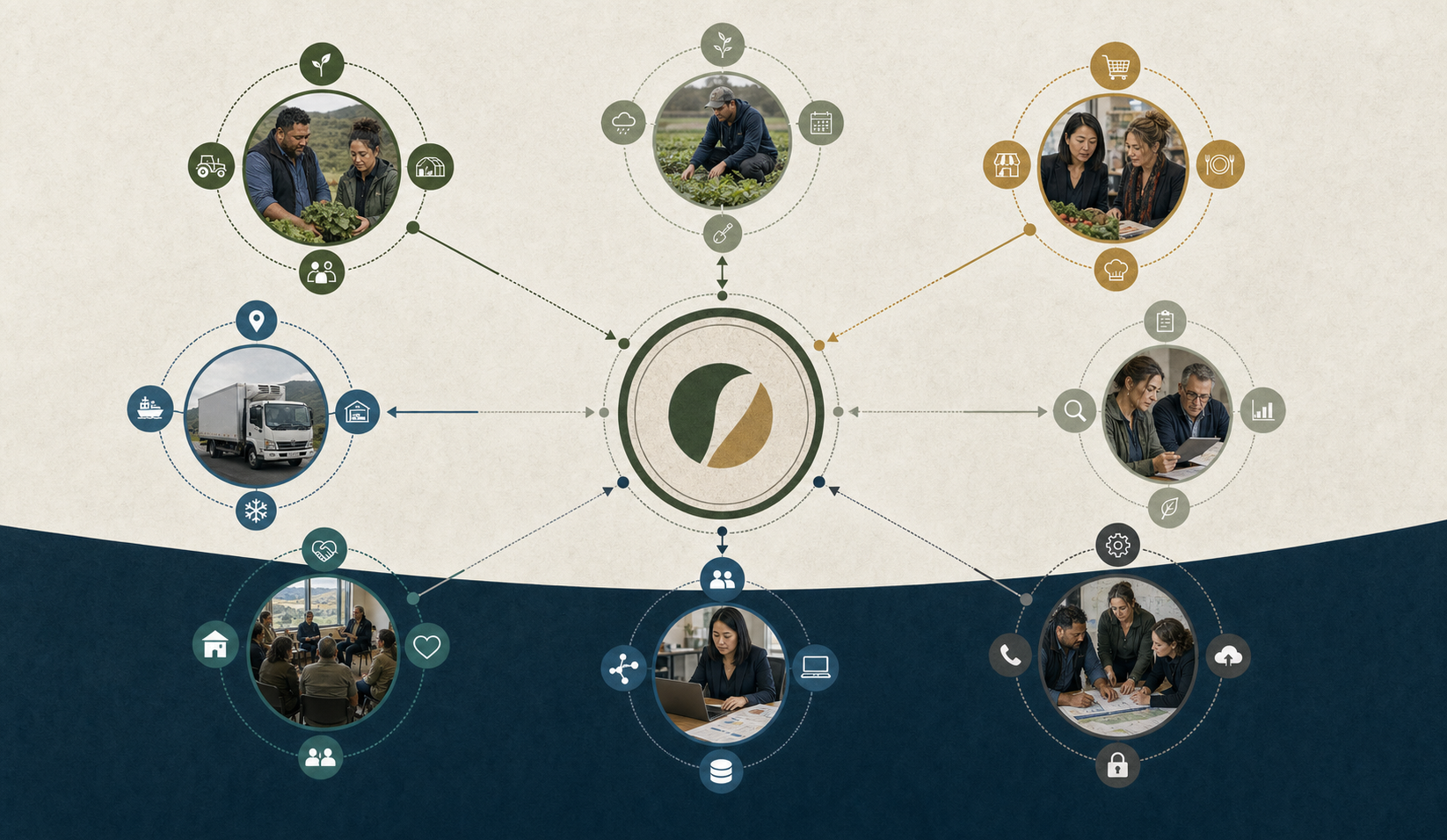
Our work depends on producers, logistics providers, buyers, advisers, storage partners, technical specialists, and community-linked relationships. Collaboration lets people stay close to what they do best while we hold the route, proof, timing, and market fit together.
Network logic
Some collaborators are public. Others work best quietly. What matters is the shape of the work: who grows, who moves, who proves, who buys, who advises, who carries local responsibility, and who helps pace a pathway as demand rises.
Long-term producer relationships, trial producers, seasonal partnerships, and small groups who need better routes without losing agency.
Cold-chain, dry storage, road freight, fulfilment, forwarding, and specialist handling relationships that make regional access possible.
Premium retail, hospitality, specialist export, food service, and category advisers who value the product for the right reasons.
Food safety, testing, product development, packaging, shelf life, environmental practice, data, and impact specialists.
Local relationships around place, language, access, employment, producer support, and public use of story.
Auditors, reporting advisers, certification pathways, and review processes that help public claims become checkable.
Ecosystem view
The centre is not ownership. The centre is coordination: making sure the right information, care, proof, product, and value move at the right time.
How we collaborate
A logistics provider is not asked to become a producer adviser. A buyer is not asked to carry local relationship work. A producer is not asked to become a brand mascot.
Route, quality, timing, and buyer feedback should move quickly enough to change decisions, not sit in private inboxes.
We describe what the pathway does, what the relationship holds, and what remains our responsibility when the work becomes visible.
When demand rises, we ask who is carrying cost, storage, labour, reputation, and the next capability need.
Collaboration is strongest when people can choose the right timing, market, story, claim, or route.
Expectations are recorded, discussed, and used to strengthen the pathway while trust is close.
Because not every useful relationship should become public proof. Some producers, advisers, local relationships, and route partners do their best work without being pulled into a public story before the work calls for it.
By keeping capacity, pricing, story use, choice, and post-route review inside the relationship. A producer should not lose voice because the pathway becomes more successful.
Reliability, route transparency, cold/dry capability, communication, and willingness to learn from small movements as well as large ones. The best route partners improve producer access without making everything feel generic.