The route mattered
A product could be beautiful at the gate and still lose value before it reached the right buyer. Timing, temperature, paperwork, price, and trust all travelled together.

Our story
We began with a practical question: how can good regional products reach stronger markets while carrying the people, places, and relationships that made the product worth wanting?
Beginnings
We began close to producers who had quality, story, and ambition, and who needed stronger systems, routes, buyer confidence, and bargaining power to reach the right market. The early work was practical: phone calls, boxes, cold rooms, route notes, buyer conversations, pricing decisions, and careful choices about what growth needs around it.
A product could be beautiful at the gate and still lose value before it reached the right buyer. Timing, temperature, paperwork, price, and trust all travelled together.
Good products carried more than flavour or function. They carried place, labour, family effort, local pride, and the care needed when a product begins to speak to a wider market.
The company would help products move, but it would also keep value, reputation, and responsibility close to the people and places that created them.
Who had product ready? Who could carry more demand? Who needed a buyer to understand the work before asking for volume?
Labels, timing, product condition, and handoffs all showed that care had to be operational before it could be public.
The buyer saw larger potential. Aotea Kai staged allocation so confidence, supply, and relationship could grow together.
Our name
The name came from the work itself. From orchard sheds, packing benches, kitchen tables, cold rooms, route maps, and buyer calls where the same question kept returning: how do we move good things without stripping away the care that made them good?
Aotea gives the company a horizon wider than one product, one district, or one sale. Kai keeps the work close to nourishment, labour, hospitality, skill, and responsibility. Partners names the kind of company we choose to be: one that moves with producers, route holders, advisers, buyers, and communities rather than standing above them.
Early working names were practical: producer network, southern pathway, market access, food routes. They described movement, but not meaning. They did not hold the meal after a long harvest day, the late-night batch notes, the quiet pride of a small producer seeing their product understood overseas, or the relief when a route finally works without asking the producer to carry every cost.
Aotea gives the company room to work across Aotearoa: from southern producers and coastal routes to international tables where a product still needs to arrive with its meaning intact.
Kai holds nourishment, work, hospitality, climate, water, health, skill, and the hands that prepared the product before it entered a market system.
Partners means a buyer conversation, a logistics decision, a story campaign, or a price negotiation should leave the relationship stronger, not just the invoice larger.
Producers talked about the things ordinary market language often misses: weather windows, batch notes, family labour, pride, local employment, and the small decisions that protect quality before anyone outside the region sees it.
Through local relationships, the name was tested for sound, sense, and weight. The strongest test was practical: let the name show up in behaviour. Let people hear it in how product is handled, how story is carried, and how value returns.
If kai is in the name, the company has to care about more than saleable units. If Partners is in the name, people need clear choices, review points, pacing, and a share in the value created by the route.
Every new product line, export push, public report, and route decision asks the same question in a different form: did the care travel, or did only the product move?
What it means in practice
The name was not chosen in a brand workshop and then explained afterwards. It came through a slower naming circle: Jack and Marama, three early producer relationships, two staff members who had carried the first route work, a language and place adviser, and a local mana whenua relationship pathway that helped the founders shape how the name should be carried publicly.
The guidance became a practical standard to keep returning to: speak broadly when the relationship is broad, keep specific stories with the people who carry them, and review public language before a campaign, report, or market push asks the story to travel further.
When a producer trusts us with a product, the route carries more than boxes. It carries confidence, future orders, reputation, story, data, and sometimes the first serious chance to reach a market that understands the value properly.
That is why Aotea Kai speaks about routes, proof, and markets in the same breath as care. A good pathway does not make the product anonymous. It helps the right people recognise what was already there.
The name signals intention, and the work gives that intention substance: producer benefit, local return, relationship, and care shown through the route.
Before a product story travels into a buyer room or public campaign, the company checks whose words shaped it, who will be visible, and how the wording supports the producer relationship.
New campaigns, place-based claims, investment language, export pushes, and impact reports all ask the same question: has the language caught up with the relationship and evidence?
As Aotea Kai grows, the name asks us to keep listening, refining practice, and returning to the relationships that give the work meaning.
Product handling, route timing, buyer fit, and proof records should protect the work that happened before dispatch.
Producer story should travel with context, consent, and enough evidence to be useful rather than ornamental.
A strong pathway leaves behind capability, confidence, fairer terms, and a clearer next decision for the producer.
When scale changes the context, the company comes back to the relationship, the route, and the records.
The best route does more than deliver. It creates room for better prices, better records, better confidence, and better choices.
The right buyer understands scarcity, handling, story, and evidence before asking for more volume.
Growth matters most when the company keeps coming back: to producers, collaborators, data, place, and the promises made along the way.
Our path
We walk backwards into the future: eyes on what carried us, hands on what comes next. Aotea Kai grew because certain routes held through careful practice, shared confidence, and enough evidence for producers, buyers, route partners, and our own people to see that something stronger than a transaction was possible.
"The first win was not that the product arrived. It was that the care arrived with it."
The breakthrough was modest: a regional product, a careful dispatch, a buyer who understood the story, and a producer paid on terms that made the next batch possible. It proved the route could carry care, not just cartons.
Small-lot wine and cellar-door pantry lines opened unexpected doors offshore. The lesson was staged growth: hold the allocation, protect the maker, and let scarcity speak while the pathway matures.
Honey sharpened the company. Provenance, testing, batch records, packaging, and careful claim language became part of the product's value. A good story became stronger when the evidence could stand beside it.
The Christchurch hub changed what regional producers could attempt. Smaller lots could be consolidated, chilled handoffs became more reliable, and export-gateway planning stopped feeling like a privilege reserved for larger players.
A regional launch helped Aotea Kai formalise how place, producer story, and public claim language are reviewed before wider campaigns. The lesson became part of the company's current story-use discipline.
Route records, producer-readiness notes, proof coverage, pathway reviews, and reinvestment decisions became more visible. Aotea Kai had to show not only what it moved, but what its movement strengthened.
As Aotea Kai became more visible, the company began showing more of its work in public: value return, route confidence, reinvestment, impact evidence, and future focus. The point was confidence people could inspect.
Wine taught Aotea Kai that some products needed allocation, not volume. The strongest buyer was not always the largest buyer. A small, well-held pathway could open international confidence without making the producer chase a market they could not sustain.
Honey made proof part of the product. Testing, provenance, batch records, packaging, and claim discipline were not compliance chores. They became part of trust, margin, and market access.
It gave the company a stronger place to consolidate smaller lots, coordinate chilled handoffs, and plan onward movement. It made more South Island pathways possible.
Company history
The public story is a set of choices about what the company counts, how it paces growth, and how it defines success before the next stage begins.
Aotea Kai began because strong products were losing value once market access, category fit, logistics, and buyer terms took over.
The early model linked producer readiness, buyer translation, storage, cold chain, claim discipline, and allocation decisions.
The company strengthened its review process so place and story language stay connected to relationship, evidence, and agreed use.
Today the public focus is whether the systems, relationships, evidence, and governance can carry the next stage well.
Public trust
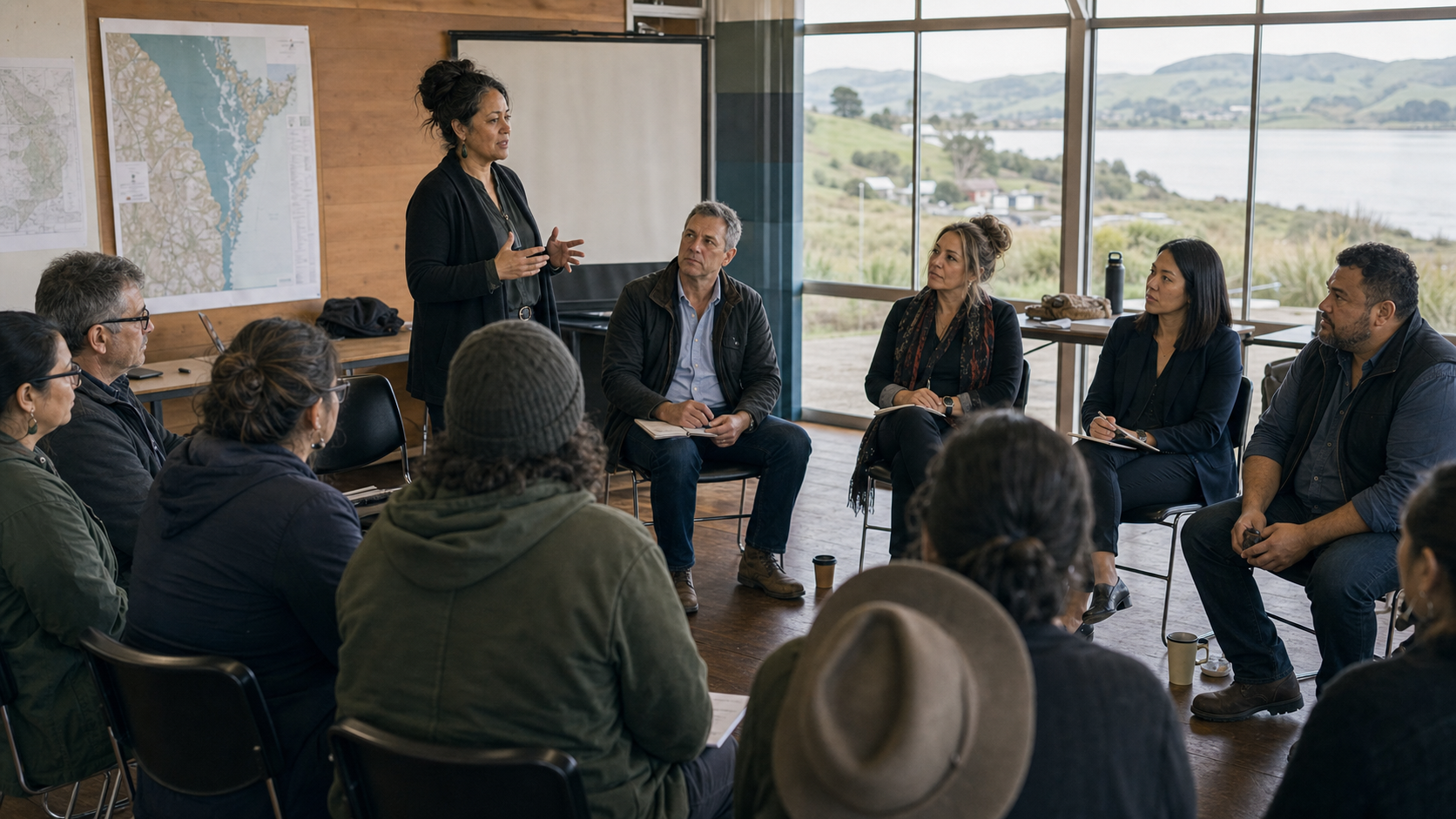
We now have to explain ourselves to people who are not in the room where the relationship began: producers, staff, buyers, communities, media, advisers, investors, and families who want to know whether the promise still holds.
Growth
We grew through linked capability: producers with distinctive products, buyers looking for credible premium supply, logistics partners who could make regional movement work, and teams who learned to translate between all of them.
Our strongest growth came from matching demand with readiness: staged allocation, product workflow, route confidence, producer capacity, and buyers whose channels could support durable value.
International demand changed our confidence. Select buyers in Australia, Japan, Singapore, the United Kingdom, and specialist channels elsewhere showed us that Aotearoa products could travel further when they carried proof, handling discipline, and a clear market reason.
Readiness
As Aotea Kai becomes more visible, the model asks for stronger readiness: clearer demand signals, better route confidence, more useful evidence, stronger review rhythm, and a careful approach to future capital.
Strong demand is most useful when producer capacity, route quality, proof records, and buyer fit are ready to move together.
Handoffs, temperature records, ferry timing, packaging, and partner communication all help the public promise travel well.
Purpose-led language is strongest when it stays connected to evidence, relationship, review, and agreed story use.
Future growth asks the company to keep producer value, route capability, evidence practice, and relationship commitments visible as the pathway expands.
What we put on record
We put more of the work on record so producers, staff, buyers, advisers, communities, and future partners can see how the model is intended to create value and how evidence is strengthening the next stage.
Aotea Kai brings together producer partnership, market access, logistics, proof, reinvestment, and story discipline. No single label carries the whole model.
Every pathway shapes how value, information, confidence, and responsibility move between producers, Aotea Kai, buyers, channels, and customers.
Claims about value kept close, producer-first practice, market discipline, and responsibility are most useful when the evidence helps the next decision become clearer.
Now
We are strengthening systems, reporting, logistics, evidence, governance, and market discipline because growth now carries more scrutiny. The test is whether we can keep our shape as more people depend on us.