Aotea Kai values wheel visual showing producers, markets, place, evidence, relationships, and reinvestment.

Values in practice

Values guide how we grow.

Our values matter most when they guide commercial decisions: how we pace growth, prepare routes, shape claims, invest in capability, and keep producer relationships close.

Our commitment to Te Tiriti o Waitangi

We are committed to honouring Te Tiriti o Waitangi in how we run Aotea Kai. That includes involving Māori producers in our decisions that affect their work, agreeing how their names and stories are used, and agreeing how they benefit from joint projects. We seek guidance from the relevant mana whenua when our work involves local places or cultural knowledge. These commitments apply when we enter new markets or bring in new investors.

The standard

Each value has to travel through a route, a buyer, a claim, and a working month.

We keep our public values close to the work: product handling, producer choice, buyer fit, place, proof, staff judgement, and the discipline to turn growth into durable practice.

Producer-first

Commitment: producer value is designed into the pathway, not treated as leftover margin.

How we use it: we check whether demand, timing, labour, cash flow, and confidence are aligned before a pathway grows.

Practice: producer conversations shape route planning, allocation, capability support, and the pace of market exposure.

Market-smart

Commitment: the right market matters more than the loudest market.

How we use it: we test whether the channel understands product, proof, service level, pricing, and story boundaries.

Practice: market fit, buyer discipline, and allocation help distinctive products hold their value.

Value kept close / utu

Commitment: growth should return capability to producers, routes, systems, people, and places.

How we use it: we define value return across payments, premiums, capability support, route support, and reinvestment.

Practice: public reporting links revenue growth with the work that strengthens the pathway behind it.

Place matters / whenua

Commitment: place is part of product, relationship, care, and responsibility.

How we use it: we review story, name, image, relationship, and claim language before it travels publicly.

Practice: story use stays connected to producer agreement, local relationship, and the purpose of the campaign.

Responsibility in practice / kaitiakitanga

Commitment: responsibility is strongest when evidence sits beside ambition.

How we use it: we ask what evidence supports a statement, what is still being measured, and how the claim will guide action.

Practice: reports, route notes, proof records, and review cycles help public language stay useful.

Relationships before volume / whanaungatanga

Commitment: scale should strengthen relationships rather than flatten them into supply.

How we use it: we ask who gets a voice before demand grows and how relationship knowledge enters the decision.

Practice: relationship rhythm, producer contact, and partner review shape how quickly a pathway moves.
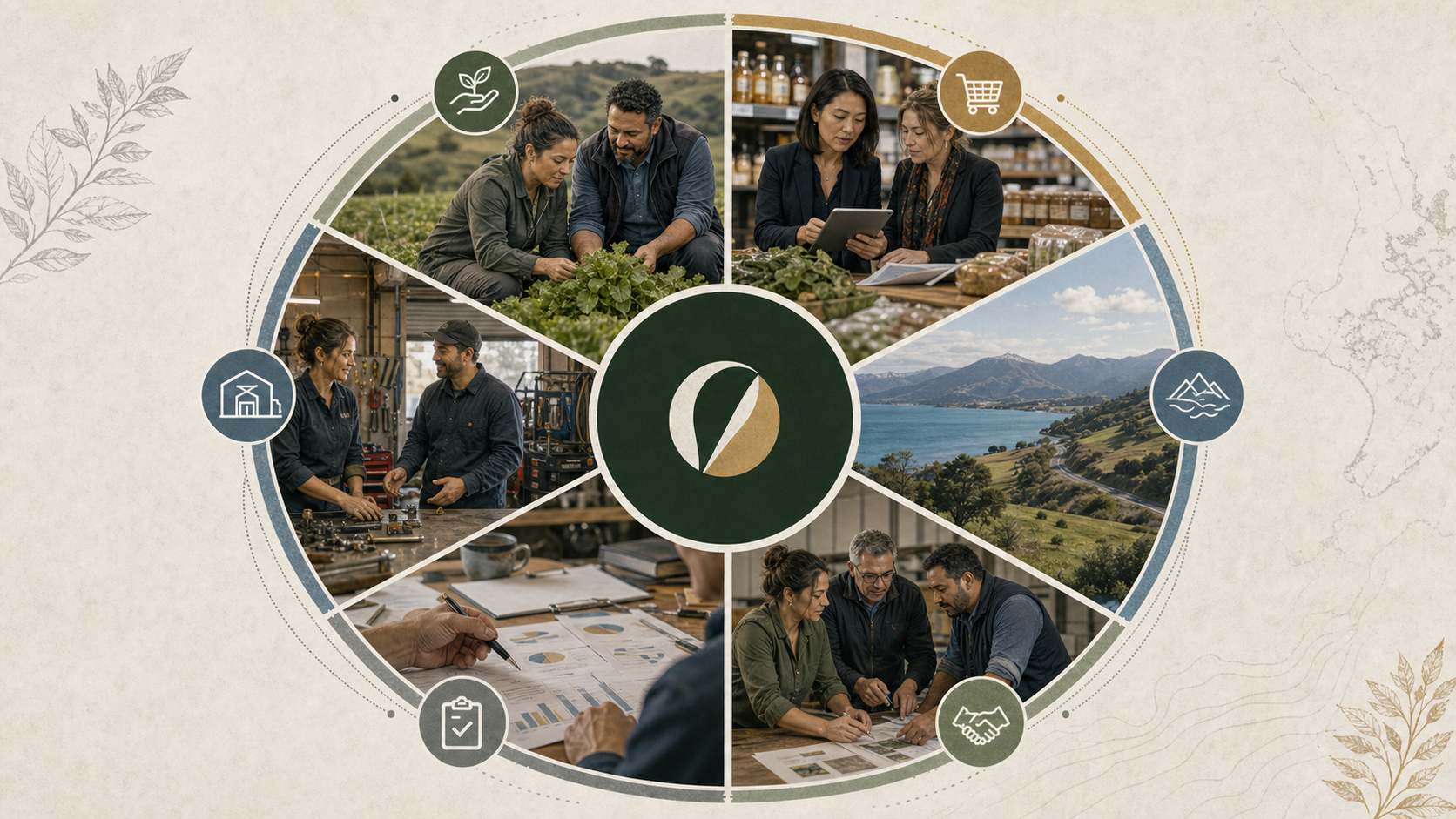
Guiding questions

Good values make decisions clearer.

We publish this page because values are strongest when they are practical. These are the questions we keep close as Aotea Kai grows, so our public language stays connected to producer care, route discipline, evidence, and return.

01

How do we pace international demand so producers, routes, and proof move together?

02

How do we keep product story, place language, and evidence aligned as interest grows?

03

How do we balance margin, producer return, and route resilience as costs change?

04

How do we keep learning visible while respecting the relationships behind the work?

Pathway discipline

The careful version of growth is still growth.

When we describe Aotea Kai as producer-first, market-smart, and value kept close, we mean growth works best when the route is ready, the story is agreed, and the evidence travels with the product. These are the standards we use to make confident growth durable.

Staged allocation before scale

We widen a pathway when product readiness, route confidence, producer capacity, claim coverage, and buyer fit can be seen together. Strong demand matters most when the pathway is ready to serve it well.

What we look for: demand matched with readiness evidence.

Claim review before campaign

Product story, place language, impact claims, and values language are reviewed before they move into public material. We prefer language that carries its basis clearly.

What we look for: claims that show proof, process, and care.

Route confidence before margin

Route decisions are assessed against handling, visibility, timing, response rhythm, partner reliability, and producer confidence. A strong route protects value before it protects margin.

What we look for: route quality that can be seen, recorded, and improved.

Value return with a clear definition

Our value-return language includes producer payments, premiums, capability support, route support, and reinvestment. We define the measure because value returns in more than one form.

What we look for: a fuller picture of where value moves.

Producer story by agreement

Producer stories travel best when the producer understands the audience, purpose, channel, and level of visibility. Some stories travel by name, some by category, and some through proof records.

What we look for: story use that respects producer choice.

Review that strengthens practice

Public wording, story use, route practice, and evidence language are reviewed after major campaigns, reports, and partner feedback. Review helps the next decision become clearer.

What we look for: learning that becomes better practice.

How values show up

The same words have different work to do in different rooms.

At the producer table

Producer-first means we ask what growth needs in labour, cash flow, family time, equipment, story visibility, and confidence. A pathway works best when the view from our office connects with the reality at the gate.

In the route meeting

Responsibility in practice means cold-chain notes, timing windows, product condition, and resource-use signals are treated as useful operating evidence. They tell us how well the public promise is travelling.

Inside a buyer conversation

Market-smart means we respect demand by matching it with fit. The right buyer understands scarcity, service level, price, story boundaries, and why some products belong in carefully chosen channels.

When we report publicly

Value kept close means we show more than revenue. We look for producer returns, capability built, route resilience, proof coverage, local initiatives, and the places where evidence is still developing.

Evidence trail

The public record should make the work inspectable.

Reports, guides, route notes, and values pages help people see the work behind the promise. We use them to define terms, share progress, and show how Aotea Kai keeps improving the pathway.

Year In Review

Numbers with context

Revenue, value return, reinvestment, proof coverage, and sentiment data sit together so the business can be read in more than one way.

Route notes

Care depends on logistics

Cold-chain records, handoffs, timing, and route partners help the public promise travel well.

Story rules

Story travels with agreement

Producer story, place language, imagery, and public claims show who shaped the words and what use was agreed.

Leadership

No single person owns the values

Values are strengthened by finance, markets, producer partnerships, logistics, evidence, and growth discipline working together.